
Eye exams
Comprehensive eye exams and eye tests in Vaughan
Avalon Eye Care offers comprehensive eye exams for children, adults and seniors at our clinic at 200 Whitmore Rd in Woodbridge (Vaughan). A full exam checks how well you see, updates your glasses or contact lens prescription, and looks inside your eyes for early signs of disease such as glaucoma, cataracts and macular degeneration. OHIP covers one eye exam a year for patients 19 and under and 65 and over. We direct-bill most private insurance plans for everyone else. Call us to check or confirm your coverage.
- Open six days a week
- New patients welcome
- Direct billing to most insurers
What a comprehensive eye exam is
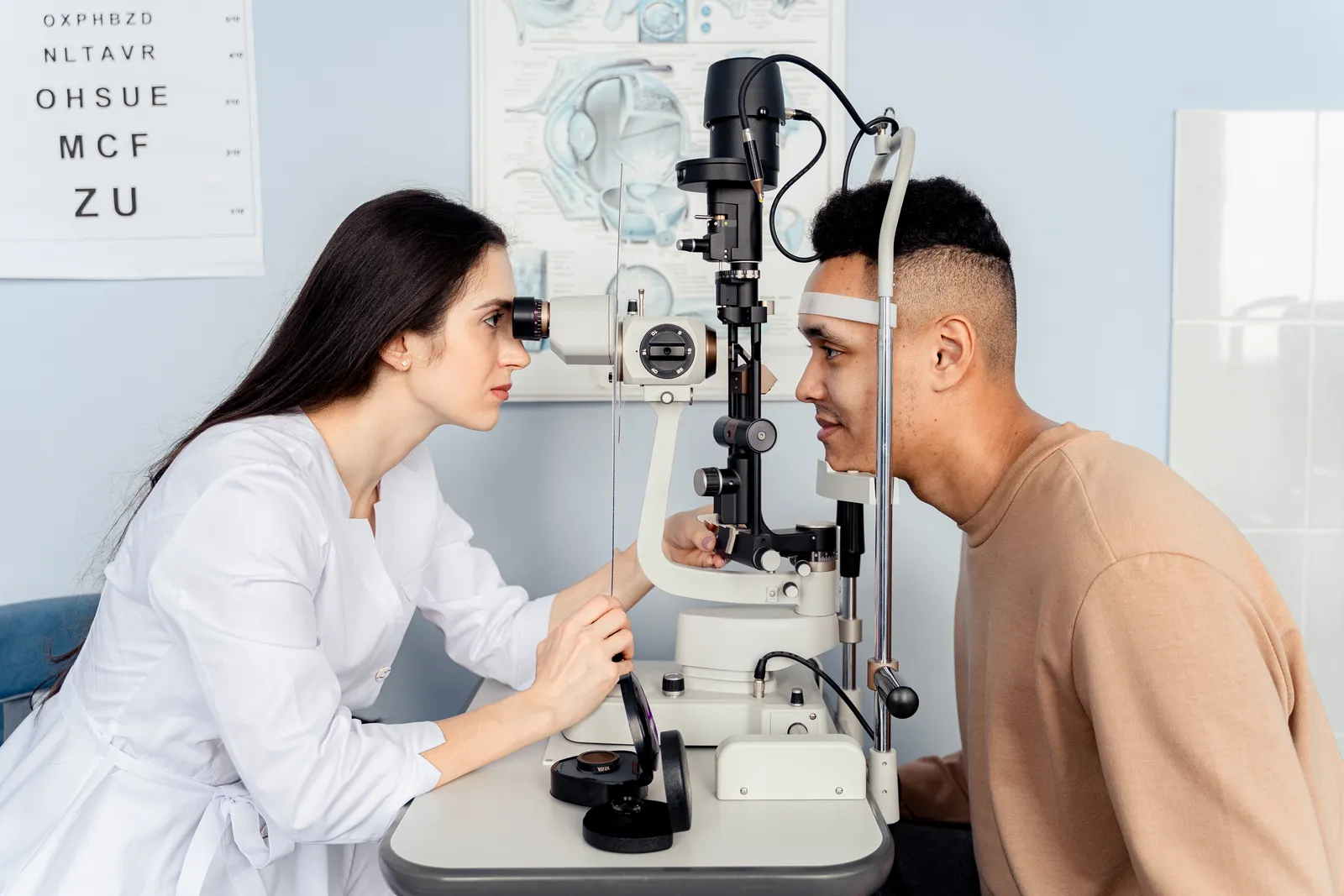
A comprehensive eye exam is a full check of your vision and the health of your eyes. For children, adults and seniors, it is an important part of looking after your general health. Your eyes should be checked regularly so you can see as well as possible and so any problem is found early.
Many serious eye diseases, including glaucoma, macular degeneration, cataracts and diabetic retinopathy, cause few or no symptoms until they have already done damage. Early detection lets our optometrists build a treatment plan with you, and in some cases it can help stop or slow a disease before it affects your sight.
Your eyes can also show signs of conditions elsewhere in the body. During a full exam, an optometrist can spot changes linked to diabetes, high blood pressure, high cholesterol, thyroid disorders, autoimmune disorders and, rarely, tumours. If we see something that needs attention, we will explain it and help you get to the right doctor.
Our clinic uses up-to-date diagnostic technology, including retinal imaging and OCT scans when they are needed, so the exam is thorough and precise. You also leave with an accurate prescription for eyeglasses or contact lenses if you need one.
Eye exam or vision screening: what is the difference?
A vision screening is a quick test that shows whether you have trouble seeing and need a proper assessment. Anyone can run one: a school nurse, a family doctor or a volunteer. A screening usually only checks how clearly you read a chart. It does not check eye health.
Most children's screenings only look for nearsightedness. Many children are actually farsighted, and they can pass a chart test while still struggling to focus up close. These children are often missed.
A comprehensive eye exam can only be done by an eye doctor, because it takes special training and equipment to look into the eye. It finds the reason behind a vision problem, checks for signs of disease that could threaten your sight, and gives you an accurate prescription.
| Vision screening | Comprehensive eye exam | |
|---|---|---|
| Who does it | Anyone with a chart | An optometrist |
| Checks clear vision | Basic distance chart | Distance, near and in-between |
| Checks eye health | No | Yes: retina, optic nerve, lens, pressure |
| Finds farsightedness and focusing problems | Often missed | Yes |
| Gives a prescription | No | Yes |

Who should book an eye exam
Children: if your child has developmental delays or trouble at school, there may be a vision problem underneath. Reading, learning and motor skills depend on good vision and on both eyes working together. Children who struggle to focus or with hand-eye coordination often get frustrated, and it can show up as behaviour problems. They rarely know their vision is abnormal, so they cannot tell you they need help. Many conditions are much easier to treat while the eyes are still developing.
Adults: if you have red eyes, eye allergies, dry eyes, swelling or eye pain, call your optometrist first. We are trained specifically to diagnose and treat eye conditions, and we can often see you sooner than a walk-in clinic.
Seniors: like the rest of the body, the eyes change with age. Presbyopia, cataracts and age-related macular degeneration can start to affect daily life. Some are an inconvenience, but others can lead to vision loss and dependence on others. Over half of vision loss worldwide is preventable with proper treatment and care.
What happens during your exam, step by step

- Health historyWe ask about your vision, any symptoms, your general health, medications and your family's eye and medical history.
- Pre-testingA team member takes initial measurements and, where needed, retinal photos or scans before you see the optometrist.
- Visual acuityWe check how clearly you see at distance and up close, with and without your current glasses or contacts.
- RefractionWe fine-tune your prescription for glasses or contact lenses.
- Eye teaming and focusingWe check how your eyes move, focus and work together, and look for muscle imbalance.
- Eye pressureWe measure the pressure inside your eyes to screen for glaucoma.
- Eye health checkUsing a microscope and lenses, the optometrist examines the front of the eye, the lens, the retina and the optic nerve for cataracts, macular degeneration, diabetic changes and other conditions. Dilating drops may be used for a wider view.
- Results and planYour optometrist explains what they found in plain language, answers questions and tells you when to come back.
A comprehensive exam usually takes 30 to 45 minutes. If it includes a contact lens fitting, retinal imaging or visual field testing, it can take up to 60 minutes.
OHIP coverage and insurance
| Age group | What OHIP covers |
|---|---|
| 0 to 19 | One full comprehensive eye exam every 12 months, plus any follow-up assessments needed |
| 20 to 64 | Call us to check or confirm your coverage. |
| 65 and over | One full comprehensive eye exam every 12 months, plus any follow-up assessments needed |
If you are 20 to 64, you can pay for the exam yourself or use private insurance. Most extended health plans include some vision coverage, and we bill most insurers directly so you do not have to send in claims yourself. Not sure if you qualify for OHIP? Ask us when you book.
How to prepare
- Your Ontario health card (OHIP card)
- Your insurance card or plan details, if you have extended health coverage
- Your current glasses, and your contact lenses or the box, with the brand and how often you wear them
- A list of your medications and eye drops
- Any previous prescriptions or eye records you have
- Sunglasses, in case your pupils are dilated
Please arrive about 10 minutes early.
If dilating drops are used, your vision may be blurry and sensitive to light for 4 to 6 hours. Bring sunglasses and consider arranging a ride. Not every exam needs dilation, and your optometrist will let you know.
How often you should have your eyes checked
- Children and teens: first exam at about 6 months, again in the preschool years, then every year
- Healthy adults 20 to 64: at least every two years, or yearly if your optometrist advises it
- People with diabetes, glaucoma, high blood pressure or a family history of eye disease: every year, or more often if needed
- Seniors 65 and over: every year
Even if you have naturally good vision or have had laser eye surgery, you still need regular exams, because eye disease can develop without changing how clearly you see. Your optometrist will tell you when your next visit should be based on what they find.
Warning signs not to wait on
These can be signs of an urgent problem. Call 905-856-3937 during clinic hours, or see our emergency eye care page. Outside clinic hours, for sudden vision loss or a chemical injury, go to the nearest emergency department.
After your exam
Your optometrist will go over your results and what they mean. If you need glasses, you can choose frames and prescription lenses in our optical boutique on site. If you are interested in contacts, we can book a fitting. If we find a condition such as glaucoma, dry eye or early macular degeneration, we will explain your options and set up follow-up visits or, if needed, refer you to an ophthalmologist.
We keep your records and images on file, so each year we can compare and spot small changes early. We see patients from Vaughan, Toronto and across the GTA.
Frequently asked questions
Are eye exams covered by OHIP in Ontario?
OHIP covers one eye exam a year for patients 19 and under and 65 and over. Everyone else can use private insurance, which we bill directly for most plans. Call us to check or confirm your coverage.
How often should I get an eye exam?
Children should be seen every year. Healthy adults 20 to 64 should be seen at least every two years. Anyone with diabetes, glaucoma, high blood pressure or a family history of eye disease, and all seniors 65 and over, should be seen every year.
What happens during a comprehensive eye exam at Avalon Eye Care?
Your optometrist reviews your health history, tests your vision, checks your prescription, measures your eye pressure, and examines your retina and optic nerve for glaucoma, cataracts, macular degeneration and other conditions. We also check how your eyes work together, and retinal imaging or OCT may be done.
What should I bring to my eye exam?
Bring your OHIP card, your current glasses and contact lenses, your insurance card if you have one, a list of medications and any previous prescriptions. If you wear contacts, note the brand and how often you wear them.
Can I drive after an eye exam if my eyes are dilated?
Dilating drops can make your vision blurry and light-sensitive for 4 to 6 hours, so bring sunglasses and consider arranging a ride. Not every exam needs dilation, and your optometrist will tell you ahead of time.
How long does an eye exam take?
A comprehensive eye exam takes 30 to 45 minutes. With a contact lens fitting, retinal imaging or visual field testing it can take up to 60 minutes. Please arrive 10 minutes early to complete your history.
Do you offer eye exams for seniors in Vaughan?
Yes. Seniors 65 and older are covered by OHIP for one exam a year, and we screen for macular degeneration, cataracts, glaucoma and diabetic changes. Call 905-856-3937 to book.
Is a school or pharmacy vision screening the same as an eye exam?
No. A screening only checks whether you can read a chart and often misses farsightedness and focusing problems. A comprehensive exam by an optometrist also checks the health of your eyes and gives you an accurate prescription.
Do I need an eye exam if I see perfectly or had laser surgery?
Yes. Glaucoma and other eye diseases can develop without blurring your vision, so regular exams are still important after laser eye surgery or if your vision is naturally good.
Related articles
Everyday eye care
Computer eye strain at work: causes and what helps
Tired, dry or blurry eyes after a day at the screen? How to set up your desk and when to get checked.
November 4, 2026
Eyewear
How to read your eyeglass prescription
SPH, CYL, AXIS, ADD and PD explained in plain language.
November 4, 2026
Everyday eye care
Blue light, screens and eye strain: what actually helps
Does blue light hurt your eyes? What really causes screen eye strain, and what helps.
October 15, 2026Related services
Children's eye exams
Gentle, OHIP-covered eye exams for babies, children and teens.
Learn more
Diabetic eye exams
Yearly OHIP-covered retinal checks to catch diabetic eye disease early.
Learn more
Senior eye care
Yearly OHIP-covered exams for 65+, with cataract, AMD and glaucoma checks.
Learn moreOCT eye imaging
A painless scan of the layers of your retina and optic nerve, done in seconds.
Learn more