
Eye health
OCT eye imaging in Vaughan
Avalon Eye Care in Woodbridge (Vaughan) offers OCT (optical coherence tomography), a painless scan that uses safe light to show the layers of your retina, macula and optic nerve. It can reveal early glaucoma, macular degeneration and diabetic eye changes before they affect your sight. The scan takes seconds per eye and adds about 5 to 10 minutes to your visit.
- Open six days a week
- New patients welcome
- Direct billing to most insurers

What OCT is
Optical coherence tomography, or OCT, is one of the biggest advances in eye imaging in decades. Think of it as an MRI for your eyes. It uses safe near-infrared light, not radiation, to take detailed cross-section pictures of your retina, macula and optic nerve in just seconds.
A regular eye exam lets your optometrist look at the surface of the retina with a bright light. OCT shows what is underneath: about 10 separate layers of the retina in high resolution. Many serious eye diseases, including glaucoma and macular degeneration, start in those deeper layers. They can stay hidden during a standard exam until they have already caused vision loss. OCT can catch them years earlier.
At Avalon Eye Care in Vaughan, OCT is part of how we protect your sight, especially if you have glaucoma risk, diabetes, macular degeneration or a family history of eye disease. It works alongside your comprehensive eye exam, not in place of it.
What OCT can detect early
- Glaucoma: measures thinning of the nerve fibre layer before any vision is lost
- Age-related macular degeneration (AMD): shows drusen, fluid and early changes in the macula
- Diabetic retinopathy: finds swelling and leaking at a microscopic level
- Macular edema: measures fluid build-up in the central retina
- Epiretinal membranes: thin scar tissue on the retina that distorts vision
- Macular holes and cysts
- Vitreomacular traction: the gel inside the eye pulling on the macula
- Optic nerve damage from injury, stroke or pressure on the nerve
You can read more about these conditions on our eye conditions clinic page.
Why OCT makes a difference
Who should get an OCT scan?
Your optometrist may suggest an OCT scan if you have risk factors or symptoms such as:
- A family history of glaucoma or macular degeneration
- Type 1 or type 2 diabetes
- High myopia (-6.00 or stronger)
- Higher than normal eye pressure found at an exam
- Sudden changes in vision or new floaters
- High blood pressure or heart disease
- Long-term use of steroids or hydroxychloroquine (Plaquenil)
If you have diabetes, OCT pairs well with our diabetic eye exams. If you are 65 or older, ask about it at your senior eye care visit, since the risk of macular degeneration and glaucoma rises with age.
Call us right away at 905-856-3937. Outside clinic hours, for sudden vision loss or a chemical injury, go to the nearest emergency department. See our emergency eye clinic page for more.
How OCT fits with the rest of your eye exam
OCT is one tool among several. Each test answers a different question, and together they give your optometrist the clearest picture of your eye health.
| Test | What it tells us |
|---|---|
| Vision and prescription check | How clearly you see and whether you need new glasses or contacts |
| Eye pressure | Whether pressure inside the eye is raised, a key glaucoma risk |
| Retinal photography | A colour photo of the surface of the retina and optic nerve to compare over time |
| Visual field test | Whether your side vision is working fully |
| OCT scan | The thickness and health of the layers beneath the retinal surface |
For glaucoma, for example, OCT shows the structure of the nerve fibres while the visual field test shows how well they work. Changes often show up on OCT first. For macular degeneration and diabetic eye disease, OCT can measure fluid and swelling that is too small to see with a light. If you are being monitored for any of these, your scans let us see whether things are stable or changing, and whether you need a referral to an ophthalmologist.
Parents sometimes ask whether children need OCT. Most healthy children do not need it routinely. Your optometrist may suggest it at a children's eye exam if something needs a closer look, or for teens with high myopia.
What to expect during your OCT scan
- Sit and rest your chinYou sit in front of the OCT machine and rest your chin and forehead on a small support.
- Look at a targetWe ask you to look at a small target light and keep still. There is no flash and nothing touches your eye.
- The scanThe machine quietly scans each eye for a few seconds. Most people are surprised how quick it is.
- Review togetherYour optometrist shows you the high-resolution images and 3D maps on screen, compares them with your earlier scans if you have them, and explains exactly what we see.
With positioning, instructions and the review, OCT usually adds about 5 to 10 minutes to your appointment. Because drops are usually not needed, you can normally drive and get back to your day right after. If your optometrist also does a dilated exam that day, plan for blurry, light-sensitive vision for a few hours.
There is nothing special to do to prepare. Bring your current glasses or wear your contacts as usual, and bring a list of any medicines you take, including eye drops. If you have had OCT scans at another clinic, let us know, since earlier images can help us compare. Children and older adults who find it hard to sit still usually manage fine, because each scan lasts only a few seconds.
After your scan
Your scan becomes part of your eye health record. If everything looks healthy, it becomes your baseline, the picture we compare against in future years. If we see something that needs attention, we explain the next steps, which may be closer monitoring here or a referral to an ophthalmologist.
How often you need another scan depends on what we find and on your eye health, and your optometrist will tell you if and when a follow-up scan makes sense.
Is OCT covered by OHIP or insurance?
OCT scans are generally not covered by OHIP in Ontario, though coverage may apply in some medically necessary situations. We will tell you at your appointment whether your scan could be covered. Many private insurance plans cover OCT under eye health assessment benefits, and we direct-bill most major Canadian insurers.
If you are paying yourself, the OCT fee is reasonable and we always discuss the cost with you before the scan. Call 905-856-3937 for current pricing, or read about direct insurance billing.
Frequently asked questions
What is OCT eye imaging?
OCT (optical coherence tomography) is a non-invasive scan that takes high-resolution cross-section images of your retina, macula and optic nerve. It can find early macular degeneration, glaucoma damage and diabetic macular edema that a standard exam may miss.
How is OCT different from a regular eye exam?
A regular exam looks at the surface of the retina with a bright light. OCT uses safe light waves to scan about 10 layers beneath the surface, where diseases like glaucoma and macular degeneration often begin, so it can catch them years earlier.
Does the OCT scan hurt or use radiation?
No. OCT is painless and uses safe near-infrared light, not radiation. Nothing touches your eye, there are no injections or dyes, and in most cases no dilating drops are needed.
How long does an OCT scan take?
The scan itself takes a few seconds per eye. With positioning and reviewing the images with you on screen, it usually adds about 5 to 10 minutes to your visit.
Is OCT covered by OHIP?
OCT is generally not covered by OHIP, though it may be in some medically necessary situations. We can advise you on coverage at your appointment.
Does my insurance cover OCT?
Many private insurance plans cover OCT under eye health assessment benefits, and we direct-bill most major Canadian insurers. If you are paying yourself, we discuss the fee upfront; call 905-856-3937 for current pricing.
How often should I get an OCT scan?
It depends on your eye health. Your optometrist recommends a schedule based on your exam, your risk factors and any condition being monitored.
Can I drive after an OCT scan?
Yes, in most cases. OCT usually does not need dilating drops. If your optometrist dilates your eyes for other parts of the exam that day, your vision may be blurry for a few hours, so bring sunglasses or a driver.
Related articles

Eye health
Diabetes and your eyes: how to protect your sight
How diabetes affects your eyes, why yearly exams matter, and what OHIP covers.
October 1, 2026
Eye health
Glaucoma early signs: what to watch for, and why you may not notice any
Why glaucoma rarely has early warning signs, who is at risk, and how it is found.
September 17, 2026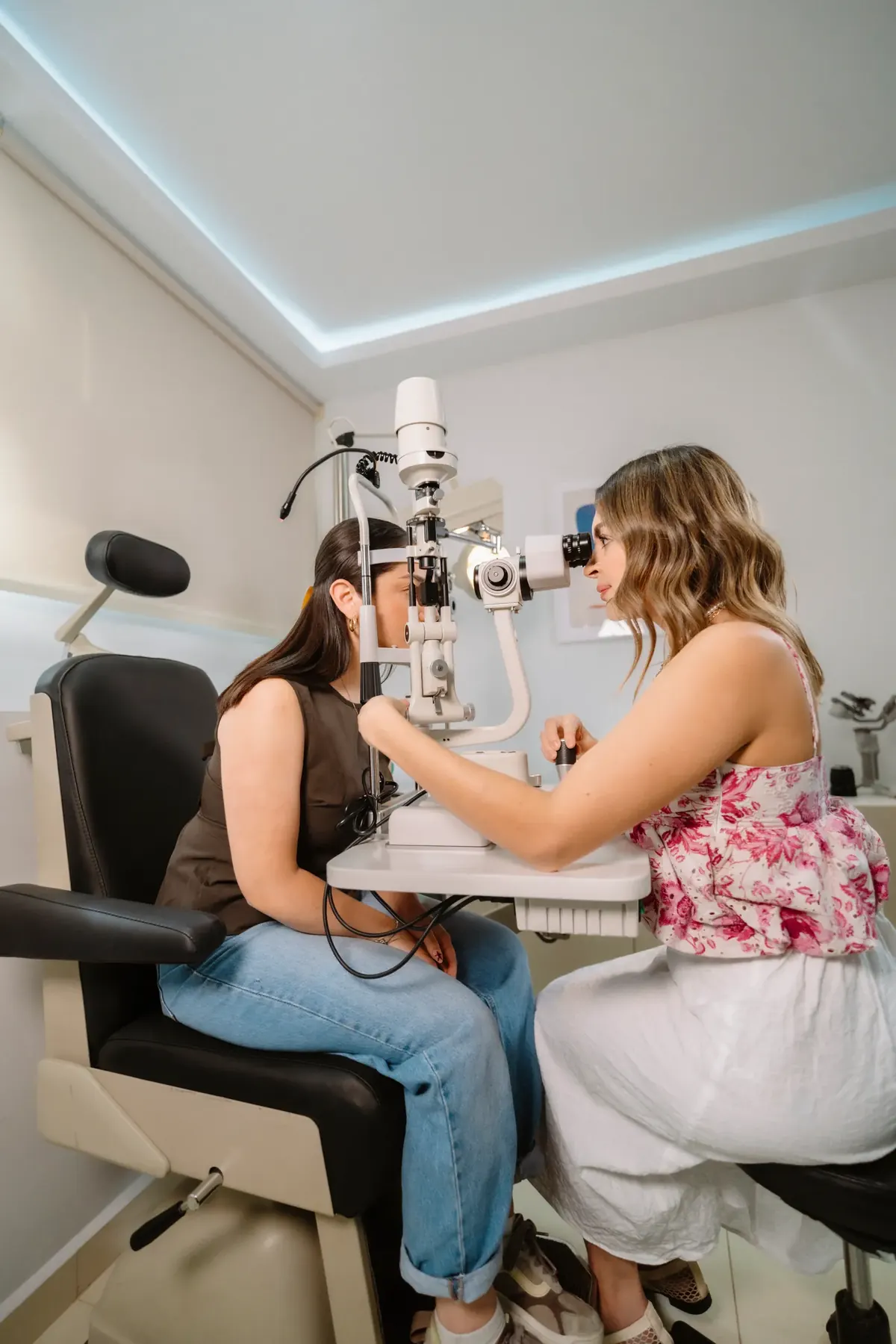
Eye exams
What happens during an eye exam? A step-by-step guide
A step-by-step look at a comprehensive eye exam, from pre-tests to eye health.
September 3, 2026Related services
Glaucoma testing
Eye pressure, visual field and optic nerve checks to catch glaucoma early.
Learn moreDiabetic eye exams
Yearly OHIP-covered retinal checks to catch diabetic eye disease early.
Learn more
Senior eye care
Yearly OHIP-covered exams for 65+, with cataract, AMD and glaucoma checks.
Learn more
Eye conditions clinic
Diagnosis and care for cataracts, AMD, glaucoma, red eyes, migraines and more.
Learn more