
Eye health
Glaucoma testing in Vaughan
Yes, Avalon Eye Care in Woodbridge (Vaughan) tests for glaucoma with eye pressure measurement, visual field testing, retinal photography, OCT imaging and a dilated optic nerve check. Glaucoma usually has no early symptoms, so testing is the only way to find it before it takes your vision. Screening is part of every comprehensive eye exam, and patients with a glaucoma diagnosis are OHIP-covered for their visits.
- Open six days a week
- New patients welcome
- Direct billing to most insurers

What glaucoma is and why it is called the silent thief of sight
Glaucoma is a group of eye diseases that damage the optic nerve, the cable that carries what your eye sees to your brain. It is often linked to raised pressure inside the eye, but it can also happen when eye pressure is in the normal range. Glaucoma is one of the leading causes of permanent blindness worldwide.
It is called the silent thief of sight because the most common type causes no pain and no symptoms in the early stages. It takes away your side (peripheral) vision first, so slowly that your brain fills in the gaps. By the time you notice a change, a lot of nerve damage has usually already happened, and that damage cannot be reversed.
There is no way to prevent glaucoma. What you can do is find it early. At Avalon Eye Care in Vaughan, our optometrists screen for glaucoma as part of every comprehensive eye exam, and we do more detailed glaucoma assessments for patients at higher risk.
Are you at higher risk?

Anyone can develop glaucoma, but some people are much more likely to. You should be tested more often if any of these apply to you:
- A parent, brother or sister with glaucoma
- Age over 60 (risk rises a lot with age)
- Higher than normal eye pressure found at a past exam
- Thin corneas
- A past eye injury or eye surgery
- Diabetes or high blood pressure
- Nearsightedness (myopia), especially high myopia
- Long-term use of steroid medicines, including steroid eye drops, inhalers or pills
- African, Caribbean or Hispanic ancestry
If you have diabetes, our diabetic eye exams include a glaucoma check alongside the retina check. If you are 65 or older, glaucoma screening is built into our senior eye care visits. Parents of children with high nearsightedness may also want to read about myopia control, since lowering a child's final prescription may lower later glaucoma risk.
How we test for glaucoma
No single test can rule glaucoma in or out. We combine several quick, painless tests so we can look at your eye pressure, the structure of your optic nerve and how well your side vision works.
Learn more about how OCT imaging in Vaughan sees below the surface of the retina, and why it helps us catch glaucoma earlier than a standard exam alone.
What happens at your glaucoma assessment
- History and risk reviewWe ask about your family history, medicines (especially steroids), past eye injuries and general health such as diabetes or blood pressure.
- Vision and eye pressureWe check how well you see and measure your eye pressure. This takes only a few minutes.
- ImagingRetinal photos and, where recommended, an OCT scan record the structure of your optic nerve so future visits can be compared.
- Visual field testYou look into a machine and press a button whenever you see a small light. Each eye takes a few minutes.
- Dilated examDrops widen your pupils so your optometrist can examine the optic nerve closely. Your vision may be blurry and light-sensitive for a few hours, so bring sunglasses and consider a driver.
- Results and planWe explain what we found in plain language. You leave with either reassurance and a recheck date, a closer monitoring schedule, or a referral.
Warning signs that need care right away
Most glaucoma is silent. A less common type, acute angle-closure glaucoma, can come on suddenly and is an emergency. Pressure can rise fast and damage the nerve within hours.
Outside clinic hours, for sudden vision loss or a chemical injury, go to the nearest emergency department. During clinic hours, see our emergency eye clinic page for what to do next.
Treatment and co-management with ophthalmologists
Glaucoma cannot be cured, but in most people it can be managed well when it is caught early. The goal of treatment is to lower eye pressure enough to protect the optic nerve from further damage. Vision already lost cannot be brought back, which is why early detection matters so much.
Treatment depends on the type of glaucoma and how far it has progressed, and it is decided together with an ophthalmologist (an eye surgeon). The main options are:
- Prescription eye drops, used every day, to lower eye pressure
- Laser treatment to help fluid drain from the eye
- Surgery to create a new drainage path when drops and laser are not enough
Our optometrists in Vaughan co-manage glaucoma patients with ophthalmologists. That means we can refer you when needed and then see you here, close to home in Woodbridge, for regular pressure checks, visual fields and imaging. We share results with your ophthalmologist so everyone works from the same information.
After your visit and how often to come back
How often you should be tested depends on your risk:
| Your situation | Typical recheck |
|---|---|
| Adult 40 or over, no risk factors | Comprehensive eye exam every 1–2 years |
| Family history, raised eye pressure or diabetes | Every year |
| Glaucoma suspect (borderline results) | Closer monitoring, as your optometrist advises |
| Diagnosed glaucoma | Regular follow-ups, often several times a year |
The Canadian Association of Optometrists recommends a comprehensive eye exam every 1–2 years for adults 40 and over. Your optometrist will set a schedule that fits your own risk and results. If you are on glaucoma drops, keep using them as prescribed, even though you won't feel a difference. Glaucoma treatment works quietly, just like the disease.
OHIP and insurance coverage
Glaucoma screening is included in a comprehensive eye exam. In Ontario, OHIP covers one major eye exam every 12 months, plus follow-ups, for patients 19 and under and 65 and over. Adults 20 to 64 are covered when they have certain medical conditions, and glaucoma is one of them, so patients diagnosed with glaucoma are covered for their medically needed visits.
If you are 20 to 64 with no qualifying condition, the exam is paid privately or through your extended health plan. We direct-bill most insurers. See direct insurance billing for details, or call us for the current fee for any test not covered.
Frequently asked questions
What is glaucoma?
Glaucoma is a group of eye conditions that damage the optic nerve, often linked to raised eye pressure. It usually causes no symptoms until significant vision has been lost, and it is a leading cause of permanent blindness.
How is glaucoma tested at Avalon Eye Care?
We use non-contact tonometry to measure eye pressure, visual field testing to check side vision, retinal photos and OCT imaging of the nerve fibre layer, and a dilated look at the optic nerve. Together these give a clear picture of your risk.
Who is at risk for glaucoma?
Risk is higher with a family history of glaucoma, age over 60, raised eye pressure, thin corneas, diabetes, high myopia, past eye injuries, long-term steroid use, and African, Caribbean or Hispanic ancestry. Everyone over 40 should be screened regularly.
Is glaucoma testing covered by OHIP?
Screening is part of a comprehensive eye exam, which OHIP covers yearly for patients 19 and under and 65 and over. Adults 20 to 64 are covered if they have glaucoma or another qualifying condition; otherwise the exam is paid privately or by insurance.
What are the early warning signs of glaucoma?
The most common types have no early warning signs, which is why testing matters. Acute angle-closure glaucoma can cause sudden eye pain, halos around lights, blurry vision, nausea or headache. If that happens, call Avalon Eye Care right away at 905-856-3937. Outside clinic hours, for sudden vision loss or a chemical injury, go to the nearest emergency department.
How often should I be tested for glaucoma?
Adults 40 and over should have a comprehensive eye exam every 1–2 years. If you have a family history, raised eye pressure or diabetes, yearly testing is recommended. Your optometrist will set the right schedule for you.
Can glaucoma be cured?
No, but it can be managed to slow or stop further vision loss. Treatment is decided with an ophthalmologist and may include eye drops, laser or surgery. Vision already lost cannot be restored.
Does the eye pressure test hurt?
No. We use non-contact tonometry, a quick puff of air that may startle you but does not hurt. Nothing touches your eye.
Can I have glaucoma if my eye pressure is normal?
Yes. Some people develop glaucoma with eye pressure in the normal range. That is why we also check the optic nerve, image the nerve fibre layer and test your side vision rather than relying on pressure alone.
Related articles
Eye health
Glaucoma early signs: what to watch for, and why you may not notice any
Why glaucoma rarely has early warning signs, who is at risk, and how it is found.
September 17, 2026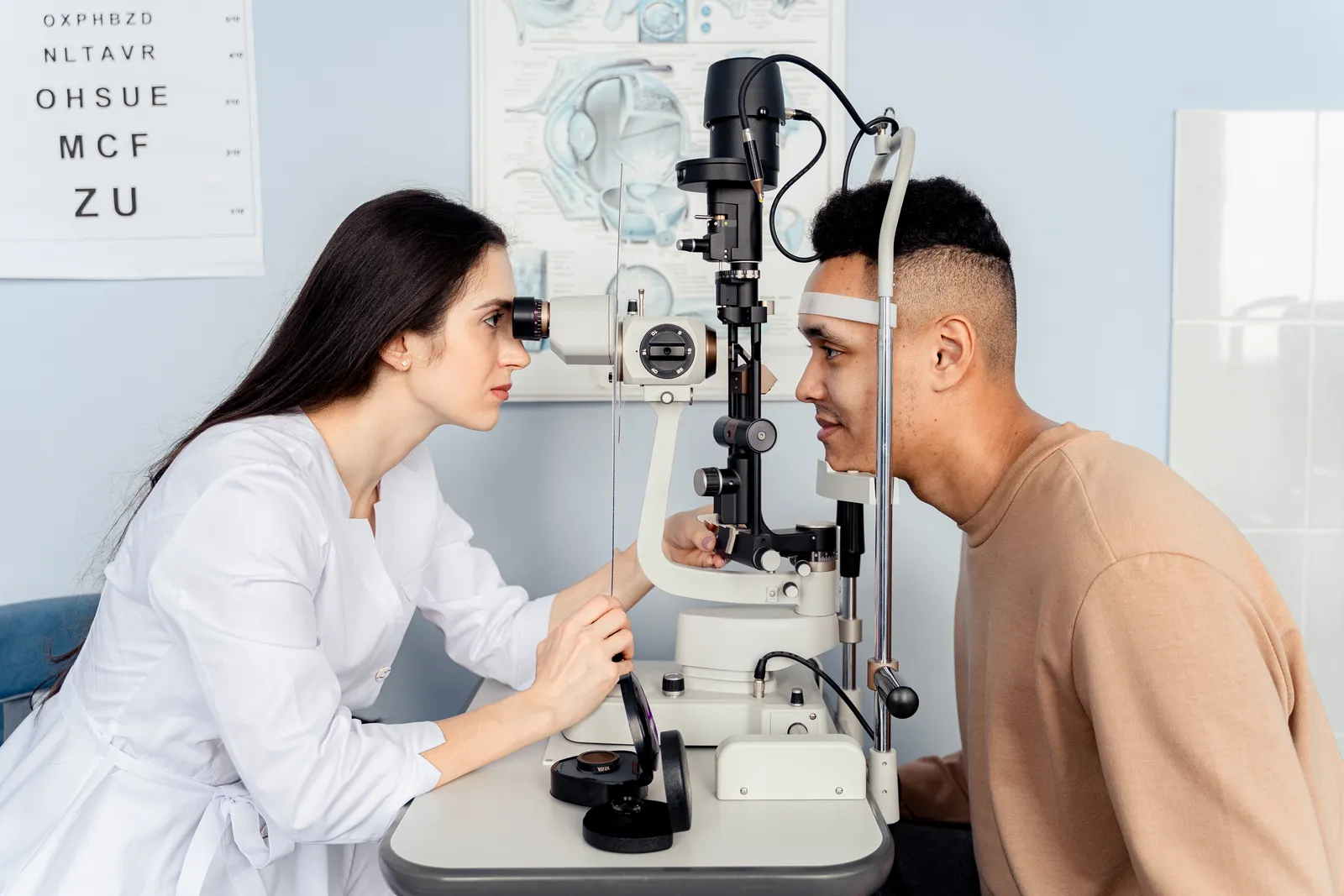
Eye exams
How often should you get an eye exam?
Recommended eye exam frequency by age, plus who needs to come in more often.
September 10, 2026Related services

OCT eye imaging
A painless scan of the layers of your retina and optic nerve, done in seconds.
Learn moreComprehensive eye exams
A full vision and eye-health check for children, adults and seniors.
Learn more
Diabetic eye exams
Yearly OHIP-covered retinal checks to catch diabetic eye disease early.
Learn more
Senior eye care
Yearly OHIP-covered exams for 65+, with cataract, AMD and glaucoma checks.
Learn more