
Children's eye exams
Pediatric eye exams in Vaughan
Avalon Eye Care in Woodbridge (Vaughan) offers gentle, comprehensive eye exams for children from 6 months of age through their teens. OHIP covers one full eye exam every 12 months, plus any follow-ups, for every Ontario child 19 and under, so you only need your child's health card. Junior Kindergarten children who need glasses can also get a free pair through the Eye See…Eye Learn program.
- Open six days a week
- New patients welcome
- Direct billing to most insurers
Why children's eye exams matter
Studies show that when a child has developmental delays or trouble at school, there may be a vision problem underneath. Learning, reading, motor development and many other skills depend not only on clear vision but on both eyes working together as a team.
Children who have problems focusing or with hand-eye coordination often feel frustrated, and this can come out as behaviour problems. Most children do not know that what they see is not normal. They assume everyone sees the way they do, so they cannot tell you they need help.
Many eye conditions are much easier to treat when they are caught early, while the eyes and the visual system are still developing. That is why our optometrists at Avalon Eye Care see children from as early as 6 months of age.
Children need these visual skills to learn well:
- Sharp, clear vision at all distances: the board, a book and a screen
- Accurate and comfortable eye teaming, so both eyes point at the same spot
- Accurate eye movements, for following a line of text or tracking a ball
- Accurate and comfortable focusing, so close work does not cause strain or headaches
A regular exam also keeps your child safe. Good vision matters in the playground, in sports and, for teens, behind the wheel. For active kids, see our guide to sports eyewear.
When your child should have an eye exam
| Age | Recommended |
|---|---|
| 6 to 9 months | First comprehensive eye exam |
| 2 to 5 years | At least one exam in the preschool years (many families come at age 3) |
| School age to 19 | Every year |
| Wears glasses or contacts | Every year, or as your optometrist recommends |
Many things affect how often a child should be seen. Only the examining optometrist, after looking at everything, can decide when your child should come back. We may recommend more frequent visits, for example if your child's nearsightedness is increasing.
Not every child gets an exam before problems show up at school. Often the first check is a school screening where the child reads a chart. A screening is not an eye exam. It usually only tests distance vision, can miss farsightedness and focusing problems, and tends to catch issues later than they should have been treated.
Signs your child may have a vision problem
Many children with vision problems show no signs at all, so a yearly exam is the only reliable way to know. Still, watch for these:
- Squinting or tilting the head to see
- Sitting very close to the TV or holding devices and books close to the face
- Frequent headaches or tired eyes, especially after school or homework
- Rubbing the eyes often
- Covering or closing one eye
- Losing their place while reading, or using a finger to follow the line
- Complaining of blurry or double vision
- An eye that turns in, out, up or down
- Avoiding reading, colouring or other close-up tasks
- Clumsiness or trouble with catching and throwing
Read more in our article on signs your child needs glasses, or our guide to when your child should first see an optometrist.
What happens at your child's exam
Pediatric exams are gentle, quick and adapted to your child's age. We use lights, pictures and fun targets designed for young children. Babies and toddlers do not need to read or answer questions.
- Talk with youWe ask about pregnancy and birth, development, health, family eye history and anything you or your child's teacher have noticed.
- Vision checkOlder children read letters or pictures. For babies and toddlers we watch how they follow and react to targets.
- Prescription checkWe measure for nearsightedness, farsightedness and astigmatism. This can be done objectively, without any answers from your child.
- Eye teaming and movementWe check how the eyes line up, move and focus together, looking for amblyopia (lazy eye) and strabismus (eye turn).
- Eye healthWe look at the front and back of the eyes. Drops may be used to relax focusing and get an accurate prescription.
- Results and planWe explain what we found and what to do next, whether that is nothing at all, glasses, or a follow-up visit.
If drops are used, your child's vision may be blurry and sensitive to light for a few hours. Sunglasses or a hat help on the way home.
Common vision problems in children
- Myopia (nearsightedness): blurry distance vision. Myopia is increasing quickly in children, and early myopia control can help slow how fast it gets worse.
- Hyperopia (farsightedness): extra effort to see up close, which can cause strain, headaches and avoiding reading.
- Astigmatism: blurry or distorted vision at all distances.
- Amblyopia (lazy eye): one eye does not develop full sight. It responds best to treatment when caught young.
- Strabismus (eye turn): the eyes do not line up. It can lead to amblyopia and affects depth perception.
- Focusing and eye-teaming problems: eyes that see clearly but struggle to work together. Some children benefit from vision therapy.
OHIP coverage for children
In Ontario, children and teens 19 and under are covered by OHIP for one routine eye exam by an optometrist every 12 months, plus any follow-up assessments that are needed. You do not need private insurance or a referral. Bring your child's Ontario health card.
OHIP does not pay for glasses or contact lenses. Many family extended health plans do, and we offer direct billing to most insurers. JK students who need glasses can get one free pair through Eye See…Eye Learn.
Eye See…Eye Learn for Junior Kindergarten
Start your child's education with good vision and healthy eyes. Our optometrists in Vaughan are members of the Ontario Eye See…Eye Learn program. If your child is starting or enrolled in Junior Kindergarten and needs glasses, they receive one pair free through the program, along with their OHIP-covered exam.
Just tell us your child is in JK when you book. Learn more on our Eye See…Eye Learn page.
How to prepare your child
- Bring your child's Ontario health card
- Book a time when your child is usually rested and fed, not at nap time
- Bring any current glasses, and notes from teachers or your family doctor
- Tell your child they will look at pictures and lights. Nothing hurts
- Bring a favourite toy or snack for younger children
Screens, outdoor time and your child's eyes
Children today spend a lot of time on tablets, phones and computers for school and fun. Long stretches of close-up work can leave eyes tired and dry, and research links more near work and less time outdoors with a higher chance of developing nearsightedness.
- Encourage time outside in daylight every day
- Follow the 20-20-20 habit: every 20 minutes, look at something about 20 feet away for 20 seconds
- Keep screens and books at a comfortable distance, not right up to the face
- Make sure your child blinks and takes breaks during long gaming or homework sessions
- Use sunglasses with UV protection outdoors, especially near snow and water
If your child complains of headaches or blurry vision after screen time, book an exam. It may be a focusing problem or a prescription that needs updating.
After the exam
If your child needs glasses, our optical boutique has frames sized for children, and we help with fit so they stay comfortable all day. Older children and teens may be ready for contact lenses. If we find myopia that is getting worse, we can talk about options such as orthokeratology. For an eye turn, lazy eye or a condition that needs a specialist, we will set up follow-up care or a referral.
We welcome families from Vaughan, Toronto and across the GTA.
Frequently asked questions
When should my child have their first eye exam?
Your baby's first eye exam should be between 6 and 9 months of age, then at least once between ages 2 and 5, and every year from school age. The visual system is still developing, so early detection matters.
Are children's eye exams covered by OHIP?
Yes. OHIP covers one comprehensive eye exam every 12 months, plus follow-ups, for all Ontario residents 19 and under. Bring your child's health card. No private insurance or referral is needed.
How can I tell if my child needs glasses?
Watch for squinting, sitting close to screens, headaches, eye rubbing, covering one eye, losing their place while reading, or complaints of blurry or double vision. Many children show no signs at all, so yearly exams are the only reliable check.
What is the Eye See…Eye Learn program?
It is an Ontario program that gives one free pair of glasses to Junior Kindergarten children who need them, along with their OHIP-covered eye exam. Avalon Eye Care is a participating clinic.
What vision problems are common in school-age children?
The most common are myopia (nearsightedness), hyperopia (farsightedness), astigmatism, amblyopia (lazy eye) and strabismus (eye turn). Myopia is increasing quickly in children, and early myopia control can help slow it.
Are eye exams safe for babies?
Yes. Pediatric exams use gentle lights and targets designed for infants, and no reading or talking is needed. The exam is quick and adapted to your child's age.
Isn't the school vision screening enough?
No. A school screening only checks whether your child can read a chart, usually at distance. It can miss farsightedness, focusing problems and eye-health issues that a full exam would find.
My child can't read yet. Can you still check their vision?
Yes. We use pictures, lights and objective measurements, so we can check vision and find a prescription without your child needing to read or answer questions.
Related articles
Children's eye care
Sports eyewear for kids: a parent's guide
Hockey, soccer, basketball and swimming: how to keep your child seeing well and safe in sport.
November 4, 2026Children's eye care
10 signs your child needs glasses: a Vaughan parent's guide
Squinting, headaches, avoiding reading: what to watch for and when to book.
March 6, 2026Children's eye care
When should my child first see an optometrist?
The recommended eye exam schedule for Ontario kids, from 6 months to 19 years.
March 6, 2026Related services
Eye See…Eye Learn (JK)
OHIP eye exam plus one free pair of glasses for JK children who need them.
Learn more
Myopia control
Slow your child's nearsightedness with Ortho-K, daily lenses or special glasses.
Learn more
Vision therapy
Treatment for eye teaming, tracking and focusing problems in kids and adults.
Learn more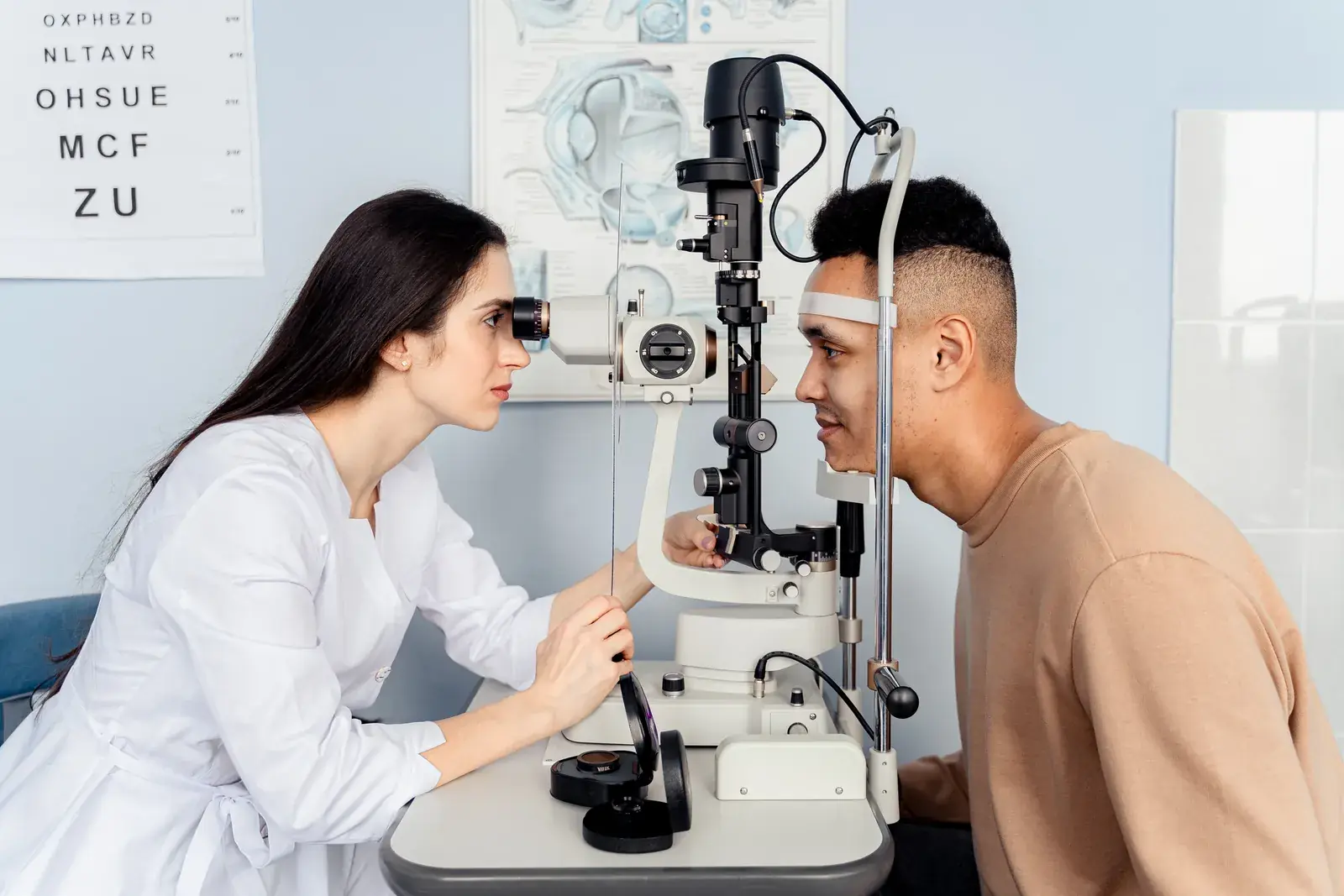
Comprehensive eye exams
A full vision and eye-health check for children, adults and seniors.
Learn more