
Children's eye care
10 signs your child needs glasses: a Vaughan parent's guide

· Updated · 4 min read
Common signs your child may need glasses include squinting, sitting close to screens, headaches, head tilting, covering one eye, avoiding reading and frequent eye rubbing. Children rarely say they can't see, so a yearly eye exam is the surest check. Avalon Eye Care in Woodbridge (Vaughan) offers OHIP-covered eye exams once a year for children 19 and under.
Why kids don't tell you they can't see
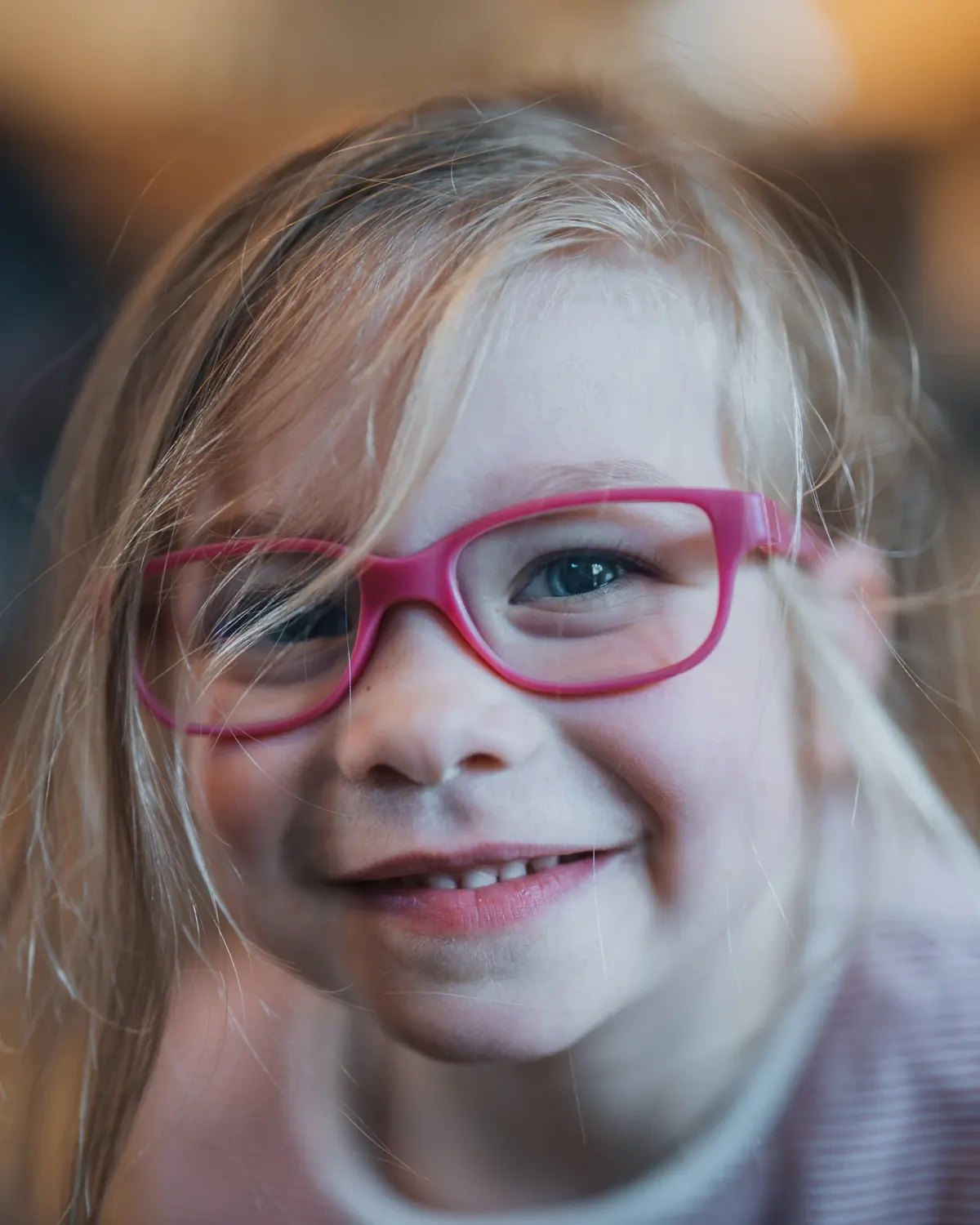
Children are remarkably adaptable. When their vision is poor, they find ways to cope, such as squinting, tilting their head or sitting closer to the screen, rather than saying "I can't see." Many kids with vision problems do not even know their eyesight is different from their friends'. As a parent, knowing what to watch for makes a real difference.
Here are 10 signs your child may need glasses or a closer look at how their eyes work together.
1. Squinting
Squinting partly closes the eye, which briefly sharpens focus by narrowing the light coming in. If your child squints at the TV, the whiteboard or anything far away, it is a strong hint of myopia (nearsightedness).
2. Sitting very close to the TV or screen
Nearsighted children naturally move closer to screens, where images look bigger and clearer. If your child keeps sitting within about two feet of the TV, or holds a tablet a few inches from their face, it is time for an eye exam. For healthy screen habits, see our post on screens and eye strain.
3. Frequent headaches
When the eyes work hard to bring a blurry image into focus, the muscles around them tire and can cause headaches, usually in the forehead or temples and often after reading or screen time. If your child often complains of headaches after school or homework, have their vision checked.
4. Tilting their head or covering one eye
Tilting the head can point to an eye muscle imbalance or astigmatism. Covering one eye while reading can mean there is a big difference in vision between the two eyes (anisometropia) or early amblyopia (lazy eye). Both need a prompt assessment.
5. Avoiding reading or close-up activities
A child with hyperopia (farsightedness) or convergence insufficiency may find reading physically uncomfortable. They may avoid books, call reading "boring" or stop reading sooner than expected. This is sometimes mistaken for a reading disorder or attention problem.
6. Losing their place while reading
Saying the words "move around" on the page, often losing their place or needing a finger to follow the line can point to convergence insufficiency, a difficulty getting both eyes to work together up close. It is very treatable, often with vision therapy, but it is easy to miss.
7. Excessive eye rubbing
Rubbing the eyes again and again, especially during close work, can be a sign of eye fatigue from focusing strain. It can also point to dry eye, allergies or other eye conditions. If your child rubs their eyes a lot, get them checked.
8. One eye turns in or out
Strabismus (an eye turn) is when one eye points in a different direction from the other. It is often most visible when a child is tired or concentrating. Left untreated, it can lead to lasting vision loss in the turned eye (amblyopia), so it needs a prompt exam.
9. Poor performance in school
Vision problems can hold back a child's schoolwork. If a bright, engaged child struggles to read, copy from the board or concentrate, an eye problem rather than a learning disability may be part of the cause. An eye exam should be one of the first steps.
10. Clumsiness or difficulty with sports
Depth perception depends on both eyes working together. A child with a large prescription difference between the eyes, or an eye alignment problem, may seem clumsy, struggle to catch a ball or find hand-eye sports hard. These can all be signs of reduced depth perception.
What to do if you notice these signs
Book a children's eye exam at Avalon Eye Care in Vaughan. Eye exams are covered by OHIP for children 19 and under, once every 12 months plus follow-ups. Bring your child's Ontario health card. Not sure when to start? Read when your child should first see an optometrist.
Treating vision problems early helps prevent long-term consequences. Children in Junior Kindergarten can also get a free pair of glasses, if they need them, through the Eye See Eye Learn program. If your child's prescription keeps rising each year, ask us about myopia control.
Frequently asked questions
What are the most common signs a child needs glasses?
Squinting, sitting close to screens, headaches, head tilting, covering one eye, avoiding reading and frequent eye rubbing are among the most common. Many children show no obvious signs at all, which is why yearly exams matter.
Will my child tell me if they can't see well?
Often not. Children usually assume everyone sees the way they do and quietly adapt, so regular eye exams are the most reliable way to find a problem.
Is a child's eye exam covered by OHIP?
Yes. OHIP covers one major eye exam every 12 months, plus follow-ups, for children and youth 19 and under with a valid Ontario health card.
Can school vision screening replace an eye exam?
No. A screening checks a few things quickly, while a full eye exam also looks at focusing, eye teamwork and eye health. A child can pass a screening and still need glasses.
Is a lazy eye treatable?
Amblyopia responds best to treatment when it is found early, while the visual system is still developing. That is why we recommend exams starting in infancy.
Our optometrists in Woodbridge see children, adults and seniors. Book an exam and talk it through in person.
Book an eye examThis article is general information, not medical advice. For advice about your eyes, book an exam with an optometrist.
More from the blog

Eye health
Cataracts: early signs and when to get checked
Cloudy vision, glare and faded colours: how cataracts start and when to have them checked.
November 4, 2026
Everyday eye care
Computer eye strain at work: causes and what helps
Tired, dry or blurry eyes after a day at the screen? How to set up your desk and when to get checked.
November 4, 2026
Contact lenses
Contact lenses for astigmatism: your options explained
Yes, you can wear contacts with astigmatism. Toric, rigid and scleral lenses explained.
November 4, 2026