
Eye exams
What happens during an eye exam? A step-by-step guide

· Updated · 6 min read
A comprehensive eye exam checks both how well you see and how healthy your eyes are: a chat about your history, pre-tests, a vision and prescription check, eye teamwork tests and a close look at the front and back of your eyes. Most exams take about 30 to 45 minutes. You can book one at Avalon Eye Care in Woodbridge (Vaughan).
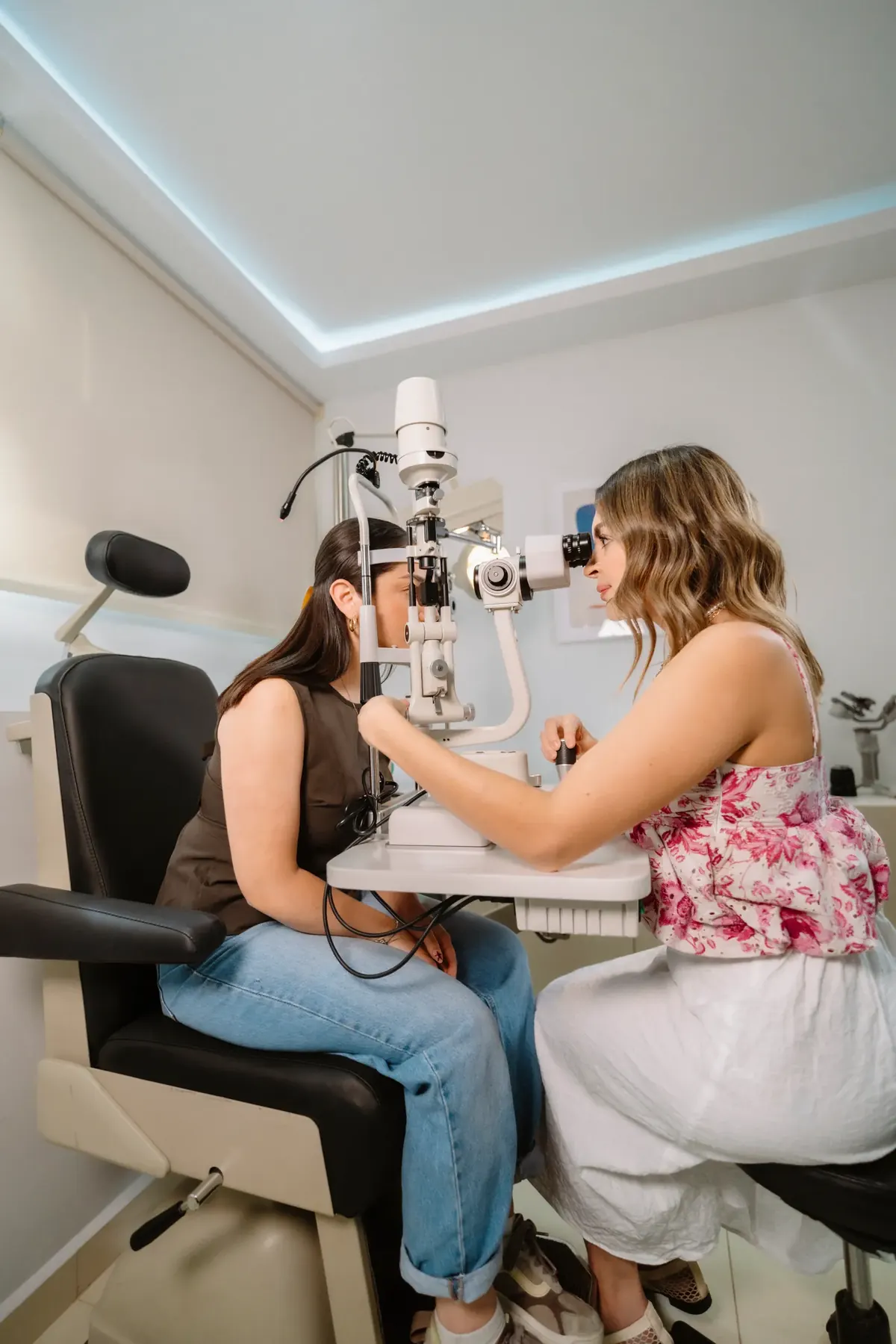
An eye exam is more than reading letters
Many people think an eye exam is just reading a chart and getting a new prescription. A comprehensive eye exam does much more. It checks how clearly you see, how well your eyes focus and work together, and how healthy every part of the eye is, from the surface to the retina and optic nerve at the back.
Many serious eye diseases, such as glaucoma and diabetic eye disease, cause no symptoms in their early stages. An eye exam is often the only way to find them while treatment can still protect your sight. Here is what to expect at a comprehensive eye exam at Avalon Eye Care.
Before your visit
A little preparation makes the exam smoother. Please bring:
- Your current glasses, including reading or computer glasses and sunglasses with a prescription
- Your contact lenses, or the box or packaging, if you wear them
- Your Ontario health card, and your insurance details if you have extended health benefits
- A list of your medications and any eye drops you use
- Notes on any symptoms: blurry vision, headaches, dry eyes, flashes or floaters
If you might have your pupils dilated, consider bringing sunglasses and arranging a ride, since your vision may be blurry and light-sensitive for a few hours afterward.
Step by step: what happens in the exam room
- 1. Your historyWe ask about your vision, any symptoms, your general health, medications, family history of eye disease, and how you use your eyes at work, at school and on screens.
- 2. Pre-testsAutomated instruments give a starting estimate of your prescription, measure the curve of your cornea and check your eye pressure. Some practices use a gentle puff of air for pressure; it is quick and does not hurt.
- 3. Visual acuityYou read letters on a chart at distance and up close to measure how sharply each eye sees.
- 4. RefractionLooking through a set of lenses, you answer the familiar question, "Which is clearer, one or two?" This fine-tunes your prescription for glasses or contacts.
- 5. Eye teamwork and focusingWe check how your eyes move, align and focus together. Problems here can cause headaches, eye strain or trouble reading even when your vision is sharp.
- 6. Front of the eyeWith a slit lamp microscope we examine your eyelids, cornea, iris and lens for signs of dry eye, infection, scratches or cataracts.
- 7. Back of the eyeWe look at the retina, blood vessels and optic nerve to screen for glaucoma, macular degeneration, diabetic eye disease, retinal tears and other conditions.
- 8. Results and planWe explain what we found in plain language, answer your questions and recommend next steps, from a new prescription to follow-up testing.
Will my eyes be dilated?
Sometimes. Dilating drops widen the pupil so we can see more of the retina. We may recommend them if you have diabetes, high myopia, flashes or floaters, a family history of eye disease, or if it has been a while since your last full look at the retina. The drops take about 20 to 30 minutes to work, and your vision may be blurry up close and sensitive to light for a few hours.
Retinal imaging can also help. OCT scanning takes detailed cross-section images of the retina and optic nerve, which is useful for finding and tracking conditions such as glaucoma and macular degeneration.
Extra tests you may need
Depending on what we find, your optometrist may suggest extra testing, either at the same visit or a follow-up:
- Visual field testing to map your side vision, often used in glaucoma testing
- A dry eye assessment if your eyes burn, feel gritty or water a lot, through our dry eye clinic
- A contact lens fitting if you want to start or change contact lenses, since a glasses prescription is not the same as a contact lens prescription
- Eye alignment measurements if you have headaches or eye strain, such as a Neurolens assessment
How children's eye exams differ
Children do not need to read letters to have a full eye exam. For babies and young children we use pictures, lights and toys, and we can measure a prescription without the child answering any questions. We check eye alignment, focusing and eye health, which matters because conditions like lazy eye respond best when treated early. Learn more about children's eye exams.
Questions worth asking at your exam
Your eye exam is a good time to ask anything that has been on your mind. Some questions patients find useful:
- Has my prescription changed, and do I need to wear my glasses all the time or only for certain tasks?
- Are my eyes healthy, and is there anything you want to keep an eye on next time?
- Am I at higher risk for any eye conditions because of my family history or health?
- Would different lenses help with screen work, night driving or reading?
- When should I come back for my next exam?
If you work long hours at a computer, drive for a living or play sports, tell us. The best glasses or contact lenses for you depend on how you use your eyes, not just the numbers on your prescription. If you need a vision report for a job or licence, mention that when you book so we can plan the right tests.
After your exam
If you need glasses, you can browse frames in our optical and our team will help you choose frames and the right lenses for your prescription and lifestyle. If we found something that needs monitoring, we will book a follow-up. If you need care from a specialist, we can arrange a referral.
Check whether OHIP covers your exam in our OHIP eye exam guide, and see how often you should get an eye exam.
Frequently asked questions
How long does an eye exam take?
Most comprehensive eye exams take about 30 to 45 minutes. Dilation or extra testing can add time.
Does an eye exam hurt?
No. Some tests involve bright lights, a gentle puff of air or eye drops, but none of them should be painful.
Can I drive after my eye exam?
Usually yes, unless your pupils were dilated. Dilation can make your vision blurry and light-sensitive for a few hours, so plan for a ride if you can.
Is a vision screening the same as an eye exam?
No. A screening checks only a few things, such as how well you read a chart. A comprehensive eye exam also checks eye teamwork and the health of the whole eye.
Can I wear my contact lenses to the exam?
Yes, wear them in and bring your glasses and lens case. We may ask you to remove them for some tests.
Is my eye exam covered by OHIP?
OHIP covers one eye exam a year for patients 19 and under and 65 and over. Others can use private insurance, and we direct-bill most insurers. Call us to check or confirm your coverage.
Our optometrists in Woodbridge see children, adults and seniors. Book an exam and talk it through in person.
Book an eye examThis article is general information, not medical advice. For advice about your eyes, book an exam with an optometrist.
More from the blog

Eye health
Cataracts: early signs and when to get checked
Cloudy vision, glare and faded colours: how cataracts start and when to have them checked.
November 4, 2026
Everyday eye care
Computer eye strain at work: causes and what helps
Tired, dry or blurry eyes after a day at the screen? How to set up your desk and when to get checked.
November 4, 2026
Contact lenses
Contact lenses for astigmatism: your options explained
Yes, you can wear contacts with astigmatism. Toric, rigid and scleral lenses explained.
November 4, 2026